Stage 5 — Tiling
Tile, porcelain and marble — what differs in fixing?
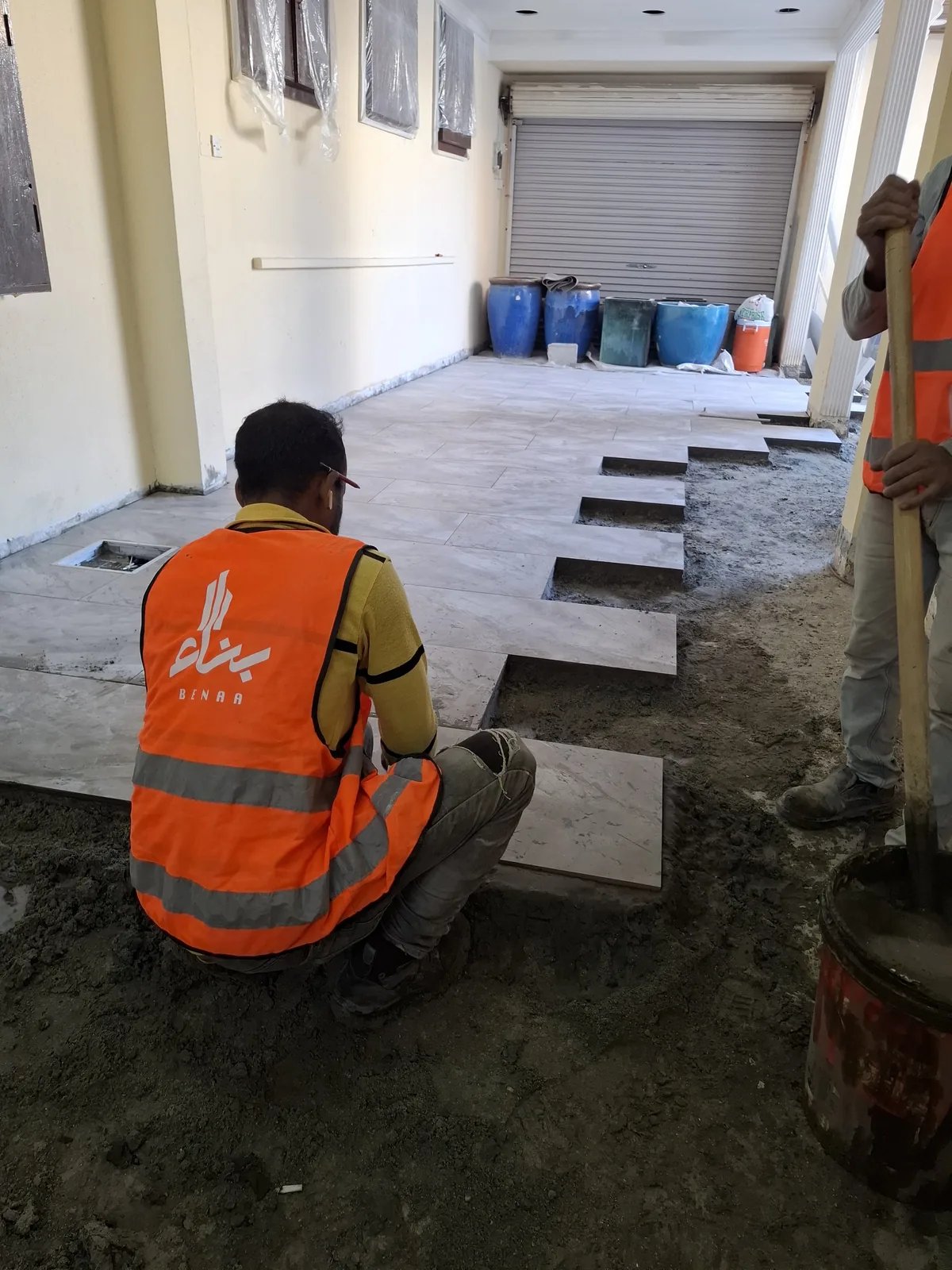
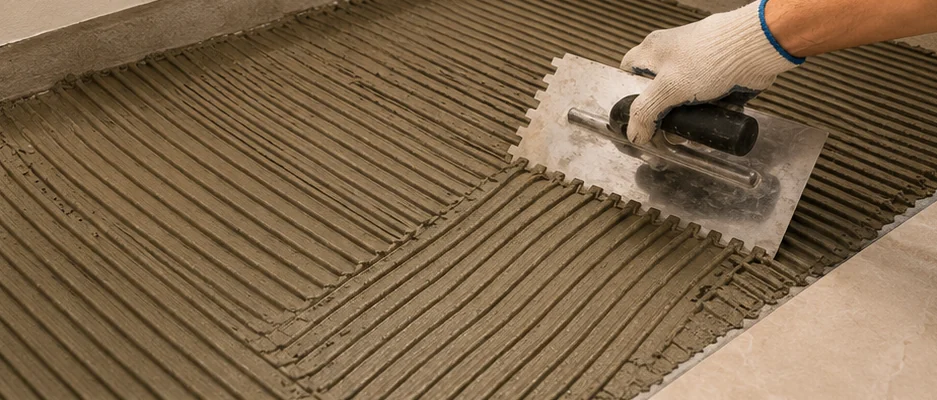
Tiling follows the primer coat and comes before the final coat of paint. It is the stage where floors and walls take their finished surface — the level, the joints and the cuts laid now are what the eye reads in every room.
All three go onto floors and walls, but they are not the same job — which is why they should not carry a single rate.
Ceramic — easiest to cut and fix, and lightest. Suited to bathrooms, kitchens and internal walls.
Porcelain — harder, less porous and more durable, but more difficult to cut and needing more precise equipment and labour. The common choice for floors and external areas, and also used on mechanically-fixed facades — a different discipline altogether, quoted separately.
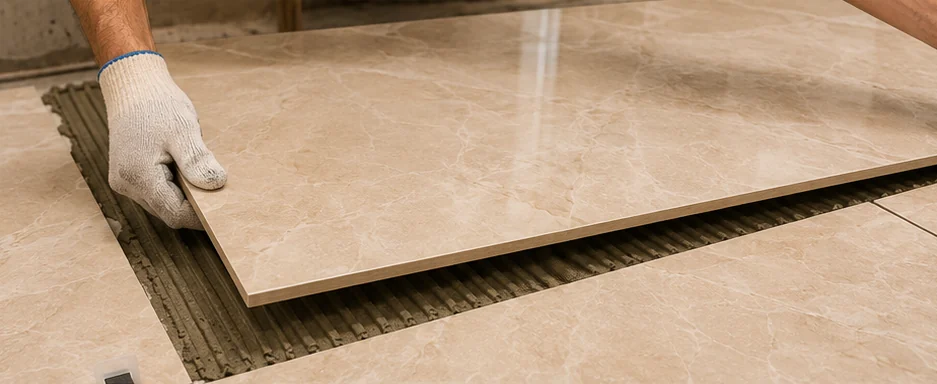
Marble — natural stone. Slabs are heavy and need more men to lift and set, a perfectly level substrate, and usually grinding and polishing after fixing. Veining also has to be sequenced and matched across slabs so the finished surface reads as one piece. That is why marble is quoted per project after seeing the material, the area and the slab size.
One of the most requested marble items in Bahrain villas is staircase marble — precise work requiring individual measurement and cutting for every tread, and consistently under-budgeted.